 Aitopkit
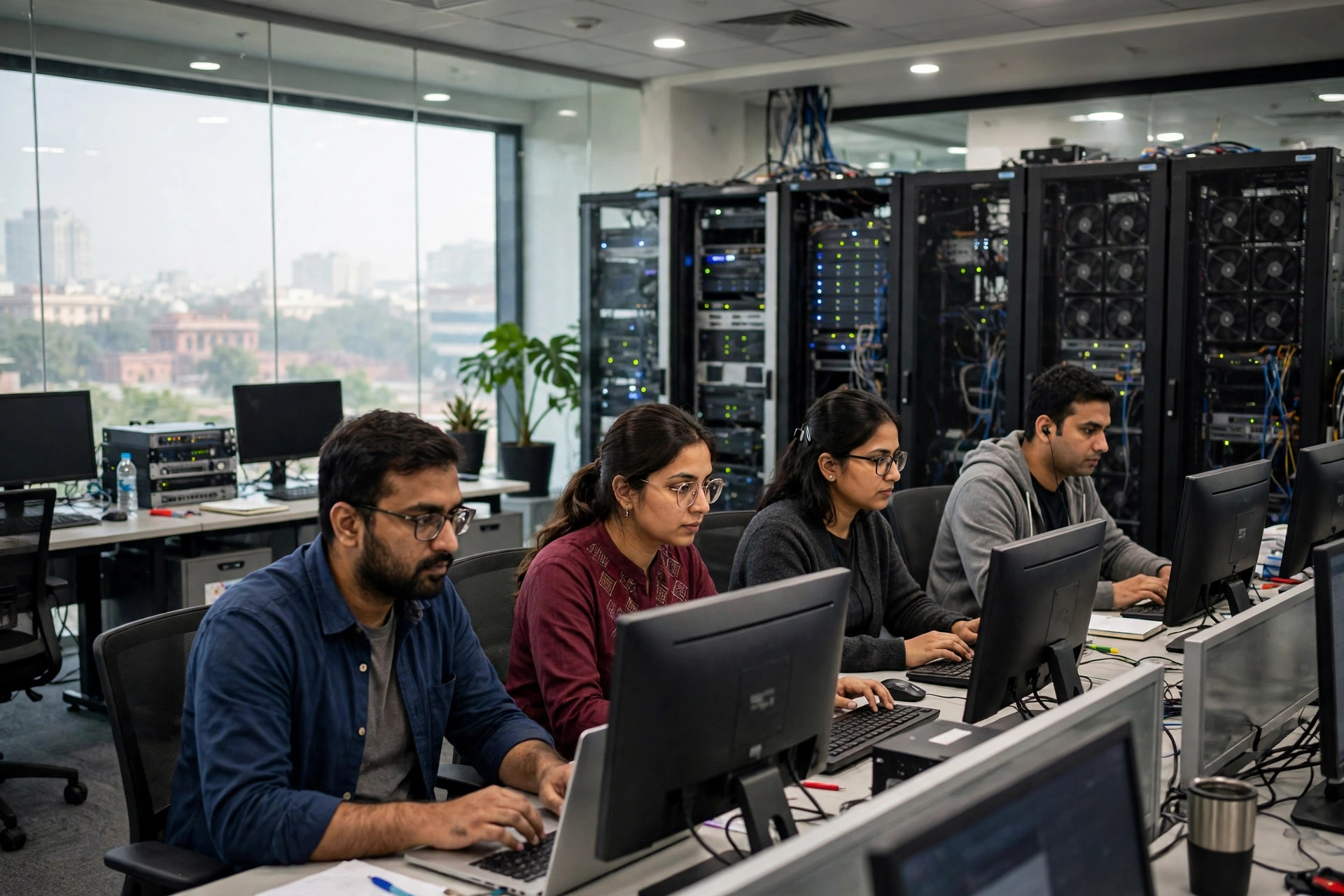
India's IndiaAI Mission unveiled three homegrown foundation models in New Delhi on 3 November 2026: EKA-1 from Soket Labs, and Dhīr 2B and Dhīr 5B from ZenteiQ. The release was presented by Ministry of Electronics and Information Technology (MeitY) Secretary S. Krishnan alongside senior MeitY and IndiaAI officials, and it is a deliberate statement about technological autonomy — models built in India, for Indian languages, and for settings where sending data to a distant cloud is not always desirable or possible.
The three models are not three versions of the same idea. EKA-1 is the heavyweight: Soket Labs describes it as an open, sparse hybrid language model with 26.3 billion parameters, trained on approximately 7.5 trillion tokens, covering all 22 languages in the Eighth Schedule of the Indian Constitution alongside English. Soket CEO Abhishek Upperwal said the model was tailored to India's banking, financial services and cybersecurity landscape, aiming at document analysis, compliance support and internal security workflows built around Indian regulatory language and multilingual customer communication. Importantly, the launch announcement does not establish that EKA-1 has already been adopted by banks or deployed in operational cyber-defence systems — that remains to be proven.
Dhīr 2B and 5B take the opposite approach. ZenteiQ's models are open-source, lightweight multilingual assistants supporting English and 10 Indian languages, designed to be deployed securely on-premise and to work offline, including on mobile phones without cloud connectivity. That design fits defence, government, industrial and educational settings, and places with low or unreliable connectivity, where document-grounded automation, knowledge retrieval and citizen services still need to work. Small models also change the cost equation: they can run on hardware an organisation already owns, rather than renting large-scale inference for every query.
Together, the trio sketches a two-track national strategy — large models for complex reasoning and agentic work, small models for privacy-sensitive, low-connectivity and cost-sensitive work — developed under the IndiaAI Innovation Centre (Foundation Models) pillar, with access promised through platforms such as AIKosh for researchers, students and innovators. The honest caveat: the government has not supplied comprehensive independent benchmark results comparing these models with established international alternatives, and detailed deployment figures are not yet available. The real test will come when researchers can try the models, publish independent evaluations, and report named pilots in banking, government or education.