 Aitopkit
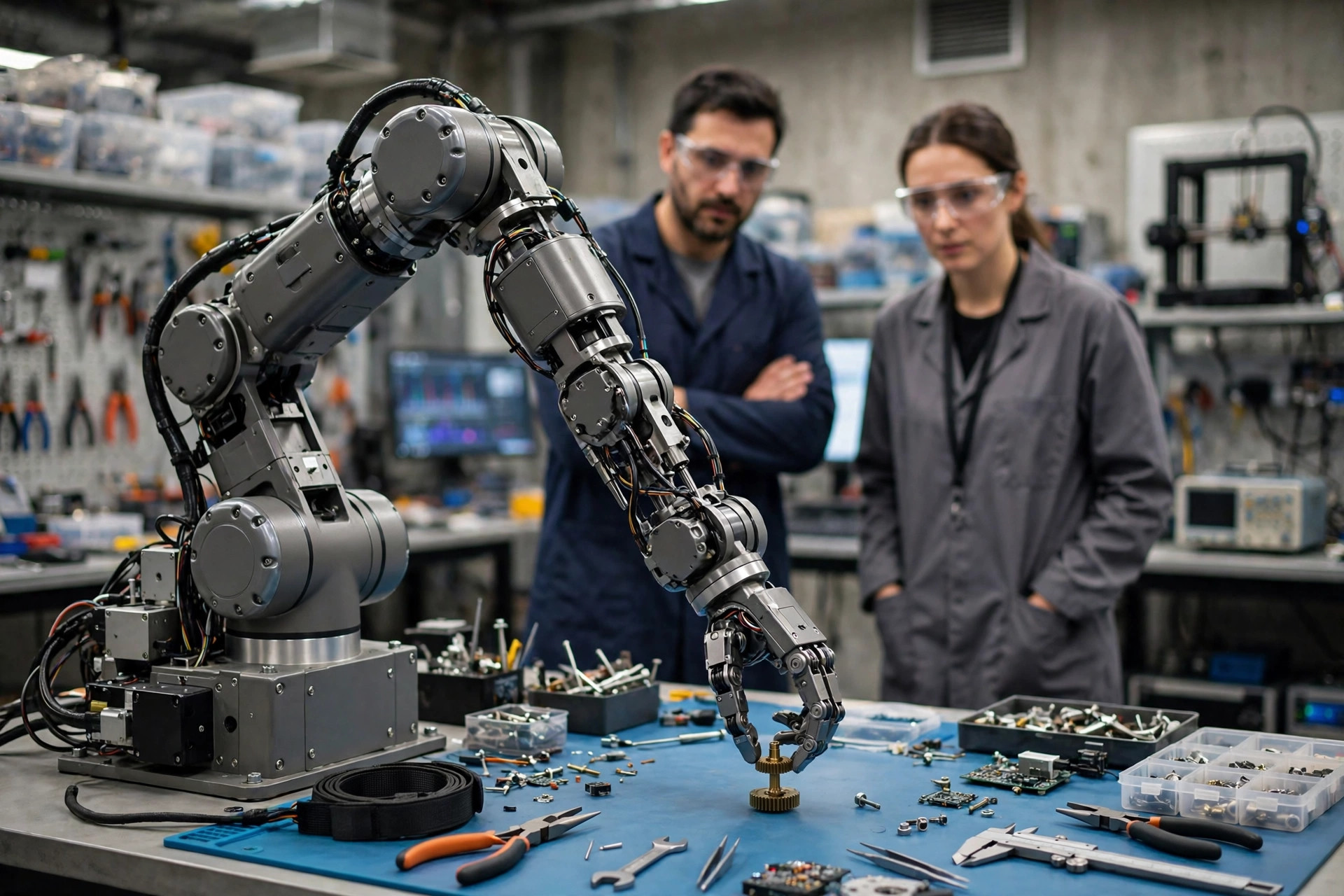
AGIBOT unveiled GO-3 Preview on 3 November 2026, an embodied foundation model that supports large-scale learning across the full lifecycle of pre-training, post-training and post-deployment. According to the company's announcement, the model has secured first-place rankings on three major embodied AI benchmarks — RoboDojo, RoboTwin and RoboColiseum — and will be fully open-sourced by the end of 2026.
GO-3 Preview is built on AGIBOT's proprietary embodied-native architecture, WRAM (World Reasoning Action Model), which unifies task understanding, future-state prediction and action generation. In plain terms, the model is designed to help robots generalise across tasks and perform precise manipulation, rather than being trained narrowly for one job in one environment. That generalisation claim is the heart of the announcement: a robot that can reason about a new task, predict what happens next, and act on it is far more useful than a robot that repeats a single scripted motion.
The launch comes as AGIBOT scales fast. In September 2026 the company announced that its 20,000th robot had rolled off the production line, and it describes itself as a pioneer in the global general-purpose humanoid robotics industry. A preview release with a full open-source commitment by year-end is a notable move in a field where leading robot models often stay closed: if the open release lands as promised, independent researchers will be able to test the benchmark claims and build on the model directly.
As with any benchmark claim, the honest caveat applies: first place on three benchmarks is a vendor-reported result, and independent verification will matter once the model is open. Still, the combination of a top-ranked preview and a dated open-source promise makes GO-3 one of the robotics stories to watch into December 2026.