 Aitopkit
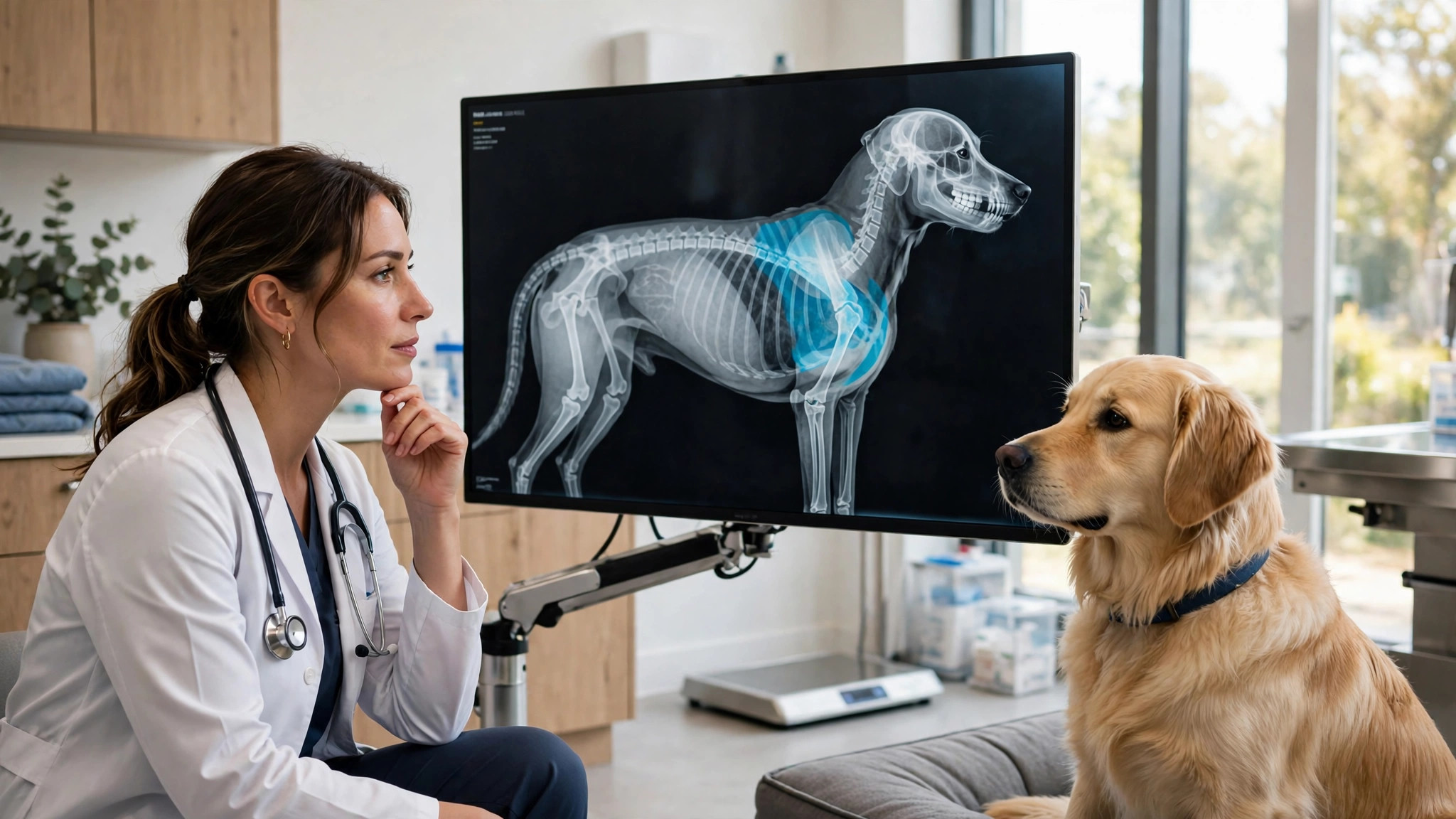
⚡ Quick verdict
- S
Best overall → Scribenote. A vet-built AI scribe with a genuinely free tier and a $79-per-vet Pro plan — the lowest-risk way to stop charting after hours.
- V
Best for multi-location groups → VetRec. Enterprise-grade scribe with HIPAA and SOC 2 Type II compliance, 10+ PIMS integrations, and a new 24/7 AI receptionist.
- T
Best dictation + scribe → Talkatoo. The longest-running vet voice tool: dictate into any field of any PIMS, plus an ambient SOAP scribe and call summaries from $40 per user a month.
- D
Best AI-native practice software → Digitail. A cloud PIMS with Tails AI built in — SOAP notes, record summaries, an AI concierge that answers clients, and a pet-parent app.
- S
Best modern PIMS with AI → Shepherd. A SOAP-first cloud PIMS with TranscribeAI, SummarizeAI and DiagnoseAI included, from $299 a month for the first vet.
- S
Best AI radiology → SignalPET. AI pre-reads for thoracic, abdominal and orthopedic X-rays with confidence scores, used by thousands of clinics.
- O
Best client comms + scribe → Otto. Automated reminders, digital forms, payments and an AI scribe in one platform that sits on top of your existing PIMS.
We may earn a commission if you buy through our links, at no extra cost to you.
Ask a vet where the day goes and the answer is rarely the medicine. It is the SOAP note after every exam, the phone that rings through lunch, the X-ray that needs a second look at 6 p.m., and the chart that still is not finished when the last client leaves. Veterinary AI in 2026 is built for exactly that gap: tools that listen to the consult and draft the record, read the radiograph before you do, answer the routine client questions, and keep the front desk from drowning — while the clinical judgment stays firmly with you.
This is a researched comparison, not a hands-on test, and we say so plainly: we did not run these tools inside a live clinic, and no figure below is presented as a measured result for your practice. Prices below are an October–November 2026 snapshot drawn from vendor pricing pages and independent pricing checks — pricing changes often, so check the official site before you subscribe. Every scribe here offers a free tier or a free trial, which is how we recommend you judge them: run one real week of consults through it before spending anything. For the human-medicine side of the same question, see our best AI tools for doctors and clinics; for the dictation and note-taking angle in general, our best AI transcription tools and best AI note-taking apps go wider. Before paying for anything here, check AI deals for current discounts, and browse our free tools page for the free tiers worth trying first.
At a glance: the 7 best AI tools for veterinarians
S#1 · Scribenote · Best overall
- Free tier
- Free plan with unlimited notes on standard AI models, no card required
- Standout strength
- The only permanent free tier among vet scribes, with a desktop widget that drops notes into any PIMS
- Best for
- Solo vets and small practices that want to try ambient scribing at zero cost
Detail
1. Scribenote — best overall
Scribenote is the easiest recommendation on this list because it asks the least of you to start. It was founded by practicing vets, and it shows in the design: you record or dictate the visit, and it returns a structured SOAP note — plus dental, surgical, callback and client-summary formats — that you move into your existing practice management system through a desktop widget, in seconds. There is no PIMS to switch, no hardware to install, and no integration project. For a solo vet or a two-doctor practice that just wants the charting done, that low friction is the whole pitch.
The pricing is the most honest in the category. The free plan costs $0 and includes unlimited note generation on the standard AI models, with unlimited care-team seats through Teams Mode — support staff use it free as long as one paid vet account is attached. Pro is $79 per vet per month billed annually ($99 monthly) and adds the most advanced AI models, custom templates, human support and PIMS integration, with a two-week free Pro trial at sign-up. That free tier is genuinely usable, not a demo: it is the only permanent free plan among the dedicated vet scribes we checked in November 2026.
The honest limits are about depth. Scribenote focuses on doing one job well — turning voice into structured notes — so it does not compute drug doses, does not run your phones, and its template library is thinner than VetRec's for specialty, ER and equine work. It is also a general-practice-first tool; mixed-animal and exotic practices should test it on their hardest cases during the trial before committing. For most GP clinics, though, the combination of a real free plan, a $79 Pro tier and zero setup makes this the first account to open.
Scribenote
Strengths
- Only permanent free tier among vet scribes — unlimited notes on standard models.
- Pro at $79 per vet per month billed annually is the cheapest paid scribe here.
- Works with any PIMS through a desktop widget and one-click copy.
- Support staff use it free with Teams Mode; you only pay per full-time vet.
Weaknesses
- Template depth is thinner than VetRec for specialty, ER and equine cases.
- No dose calculation — notes are AI-written, not computed.
- Documentation only — no phones, reminders or client comms built in.
- GP-first; exotic and mixed-animal practices should trial their hardest cases first.
V#2 · VetRec · Best for multi-location groups
- Free tier
- 14-day free trial on all plans, no card required
- Standout strength
- Deepest template library for specialty, ER, equine and exotics, with HIPAA and SOC 2 Type II compliance
- Best for
- Multi-location groups, specialty and academic hospitals that need enterprise credentials
Detail
2. VetRec — best for multi-location groups
VetRec is the enterprise-grade option in veterinary AI scribing, and it is the one large groups reach for when compliance and coverage matter as much as the note itself. It records the consult and generates a SOAP note in about 30 seconds, with customizable templates, multi-pet support, a records-recap feature that summarizes a long history before a follow-up visit, and integrations with more than 10 practice management systems — cloud and on-premise alike. It counts multi-site organizations and academic teaching hospitals among its customers, which is the clearest signal of where it fits: practices where one tool has to work the same way across many doctors and many locations.
The compliance posture is the strongest on this list. VetRec states HIPAA compliance and SOC 2 Type II certification, plus GDPR and TX-RAMP Level 1, and it offers a 14-day free trial with no card. Pricing is published at $99 per vet per month billed annually or $150 billed monthly for the standard plan, with Enterprise custom-quoted for large hospital groups — though some third-party comparisons report higher indicative figures ($149–$249 per vet per month depending on scope), so confirm the current price with VetRec before budgeting. In July 2026 VetRec also launched an AI Receptionist that answers clinic calls 24/7, books appointments into your existing PIMS and logs messages; receptionist pricing is not published and is sold through their sales team.
The honest limits are cost and newness. At $99–$150 per vet per month, VetRec costs roughly double Scribenote's Pro tier, and a solo GP will not use the specialty templates that justify that price. The AI Receptionist is also a young product — launched in mid-2026 — so its track record is shorter than the scribe's, and client texting and outbound follow-ups were announced as coming next rather than shipped. If you run one small GP clinic, start with Scribenote. If you run a group, a specialty hospital or an academic practice, VetRec is the scribe built for your scale.
VetRec
Strengths
- Strongest compliance credentials here: HIPAA, SOC 2 Type II, GDPR, TX-RAMP Level 1.
- Deepest template library — specialty, ER, equine, exotics and academic workflows.
- Integrates with 10+ PIMS, cloud and on-premise.
- AI Receptionist answers calls 24/7 and books into your PIMS.
Weaknesses
- Roughly double Scribenote's price per vet — overkill for a solo GP.
- No permanent free tier; 14-day trial only.
- AI Receptionist pricing is not published; some features still rolling out.
- Third-party price reports disagree — confirm the current rate before budgeting.
T#3 · Talkatoo · Best dictation + scribe
- Free tier
- Free trial (7 days) plus a 30-day money-back guarantee
- Standout strength
- Dictates directly into any field of any PIMS — the most compatible workflow for legacy server systems
- Best for
- Vets who prefer dictating and practices on AVImark, Cornerstone or other legacy systems
Detail
3. Talkatoo — best dictation + scribe
Talkatoo is the longest-running name in veterinary voice technology — in the market since 2019, with a reported 14,000+ users and a Patterson Veterinary partnership — and it is the only tool here that started as dictation and grew into a scribe, rather than the other way around. That history matters for one reason: Talkatoo emulates your keyboard, so you can dictate directly into any field of any program — AVImark, Cornerstone, ezyVet, Impromed, Digitail, Neo and more than 30 PIMS in total — with no export and no copy-paste. For practices on legacy server systems where nothing else writes back natively, that is quietly the most compatible workflow in this article.
On top of dictation sits an ambient scribe. The SOAP Notes plan is $40 per user per month billed annually ($50 monthly) and covers auto-generated records from 10+ default templates. The Ultimate plan is $99 per user per month billed annually ($119 monthly) and adds custom templates, call summaries, auto follow-ups, an AI assistant, medical history summarization and desktop dictation. Talkatoo also offers a desktop AI assistant that can transcribe and summarize client calls, write radiology reports from your dictation, and handle admin tasks by voice. It is rated 4.7 out of 5 on 221 Capterra reviews as of November 2026.
The honest limits follow from the dictation heritage. Talkatoo is not a true ambient-first scribe in the way Scribenote or VetRec are: it is strongest when the vet talks to the chart, and its SOAP notes are AI-written rather than computed, so doses still need your check. There is no PIMS write-back beyond dictation — it types where you point it, which is a strength for compatibility but means no automatic sync. If your team already talks to their charts and you run a legacy PIMS, Talkatoo is the natural fit. If you want a fully hands-off ambient scribe, start with Scribenote or VetRec instead.
Talkatoo
Strengths
- Dictates into any field of any PIMS — works with 30+ systems, including legacy server PIMS.
- Most established vet voice vendor: since 2019, 14,000+ users, Patterson partnership.
- SOAP Notes tier from $40 per user per month billed annually is affordable.
- AI assistant handles call summaries, radiology reports and admin tasks by voice.
Weaknesses
- Dictation-first, not a true ambient scribe — you talk to the chart, it does not just listen.
- No native PIMS write-back; it types where you point it.
- Doses are AI-written, not computed — always verify.
- No permanent free tier; trial only.
D#4 · Digitail · Best AI-native practice software
- Free tier
- Free trial with the PIMS; no permanent free plan
- Standout strength
- Tails AI is built into the PIMS — notes, summaries, intake and client messaging in one system
- Best for
- Modern, tech-forward clinics that want AI inside the practice software, not bolted on
Detail
4. Digitail — best AI-native practice software
Digitail is the only tool on this list that is a practice management system first and an AI tool second — and that is the point. Instead of adding a scribe on top of your PIMS, Digitail builds Tails AI into the PIMS itself: a chatbot-style assistant that creates SOAP notes, summarizes patient histories, automates intake forms, navigates records and helps with treatments, all inside the same system where the record lives. Its AI Concierge goes further than any other tool here on the client side: it answers a client's question conversationally inside a chat thread, rather than just drafting a reply for a staff member to send. Add the Pet Parent App, built-in payments and VoIP, and you have one system covering charting, comms and money.
The trade-off is price and commitment. Digitail sells by quote across four tiers (Mobile, Growth, Growth AI and Enterprise), with VoIP as a paid add-on, and does not publish a price on its site. Third-party comparisons in 2026 put it near $289 per user per month — treat that as a reported figure, not a vendor price, and check the official site before budgeting. Digitail reports that Tails AI saves around 8 minutes per SOAP note, or 10+ hours a week per veterinarian, but that is a vendor-reported figure, not an independent measurement, so judge it on your own trial. Digitail holds a 4.7 out of 5 rating on Capterra from 97 reviews as of June 2026.
The honest limits are the ones that come with any all-in-one system. You cannot use Tails AI without running Digitail as your PIMS, so switching means migrating your whole practice — a bigger decision than adding a $79 scribe. Quote-based pricing also makes it hard to budget without a sales call, and the AI Concierge answering clients directly will not suit every practice's comfort level. But if you are choosing a PIMS anyway, or you are ready to leave a legacy system, Digitail is the most AI-complete practice platform on this list.
Digitail
Strengths
- AI built into the PIMS — no second system, no copy-paste, no integration project.
- AI Concierge answers client questions directly inside the chat thread.
- Pet Parent App, payments and VoIP in the same platform.
- Cloud-based and mobile-friendly, including for mobile and housecall vets.
Weaknesses
- Quote-based pricing — no published price; third parties report around $289 per user per month.
- Tails AI only works inside Digitail — switching PIMS is a whole-practice migration.
- Time-saved figures are vendor-reported, not independently measured.
- VoIP is a paid add-on, not included in the base tiers.
S#5 · Shepherd · Best modern PIMS with AI
- Free tier
- Free trial with the PIMS; no permanent free plan
- Standout strength
- Three named AI tools — TranscribeAI, SummarizeAI and DiagnoseAI — inside a SOAP-first workflow
- Best for
- Small to mid-sized practices that want a modern cloud PIMS with AI included
Detail
5. Shepherd — best modern PIMS with AI
Shepherd is a cloud practice management system founded by a veterinarian, and its design shows it: the whole workflow is built off a traditional SOAP record, so administering a treatment automatically adds it to the invoice and attaches the discharge instructions. Inside that workflow sit three named AI tools. TranscribeAI listens to live exam conversations and auto-fills SOAP notes in real time. SummarizeAI condenses patient records. DiagnoseAI assists with differential diagnoses using patient history and peer-reviewed sources. All three are included with Shepherd — no add-on fee, no third-party app, no copy-paste.
Pricing is published and per-doctor: one doctor is $349 a month, or $299 with Shepherd Pay; doctors two and three are $99 each, and each doctor after that is $49. Technicians, CSRs and practice managers get their own logins at no extra cost. Multi-location groups pay $249 per location a month ($199 with Shepherd Pay) plus $99 per doctor. Shepherd is SOC 2 and TX-RAMP certified, offers a free trial, and holds a 4.7 out of 5 Capterra rating from 87 reviews as of June 2026. A pet portal and two-way texting are included in the base subscription with no per-message fees.
The honest limits are the same as Digitail's, at a smaller scale. Shepherd's AI only exists inside Shepherd, so it is a PIMS decision first and an AI decision second — if you love your current PIMS, a standalone scribe is the cheaper move. At $299 a month for a single vet, it also costs more than a standalone scribe before you count the PIMS value, and the DiagnoseAI suggestions are evidence-backed starting points, not diagnoses — the vet still decides. For a small or mid-sized practice that wants one modern system with the AI already inside it, though, Shepherd is the most workflow-first option here.
Shepherd
Strengths
- Three AI tools included — TranscribeAI, SummarizeAI and DiagnoseAI — at no extra charge.
- SOAP-first workflow: treatments auto-build the invoice and attach discharge instructions.
- Published pricing; staff seats free — you only pay per doctor.
- Pet portal and two-way texting included, no per-message fees.
Weaknesses
- AI only works inside Shepherd — a PIMS switch, not a plug-in.
- $299 a month for one vet is more than a standalone scribe alone.
- DiagnoseAI suggestions are starting points, not diagnoses.
- Best for GP and small-to-mid practices; large specialty hospitals may need more.
S#6 · SignalPET · Best AI radiology
- Free tier
- Demo available; no free tier published
- Standout strength
- AI pre-reads for thoracic, abdominal and orthopedic radiographs, with confidence scores and annotated findings
- Best for
- Clinics that take a lot of X-rays and want a fast second read before the owner conversation
Detail
6. SignalPET — best AI radiology
SignalPET is the only tool on this list that does not touch your notes at all — it reads your images. Its 360° product tier covers thoracic, abdominal and orthopedic radiographs, returning an AI pre-read with annotated findings and confidence scores, usually within minutes of the study being taken. For a GP vet, that changes the shape of the X-ray conversation: instead of taking the films, sending them out and waiting, you get a structured first read while the patient is still in the building, and you can talk to the owner with findings in hand. With a reported install base of around 2,500 clinics, most major equipment vendors already route DICOM studies to SignalPET, so deployment is closer to an account setup than a software install.
Pricing is per-clinic and per-volume, and SignalPET does not publish a price — you book a demo and get quoted on your study volume. That is the honest trade-off of the category: radiology AI is priced like a diagnostic service, not a monthly app, so a high-volume clinic will pay very differently from a practice that shoots ten films a week. Ask for the per-study cost on your actual volume before you compare it to anything else here, and ask whether the quote includes all three body systems or just one.
The honest limits are about what a pre-read is. SignalPET gives you findings and confidence scores, not a diagnosis — the vet reviews the images, weighs the AI read against the exam, and signs off. It also covers radiographs, not ultrasound or advanced imaging, so it solves one imaging job, not all of them. And because pricing is quoted, you cannot budget it from this page. But if X-rays are a daily bottleneck in your clinic, a fast AI pre-read is one of the highest-leverage AI purchases a vet can make.
SignalPET
Strengths
- Fast AI pre-reads for thoracic, abdominal and orthopedic X-rays, with confidence scores.
- Findings in minutes, while the patient is still in the clinic.
- Wide install base (~2,500 clinics); most equipment vendors already DICOM-route to it.
- Deployment is close to an account setup, not a software install.
Weaknesses
- No published price — per-clinic, per-volume quotes only; book a demo to learn the cost.
- A pre-read, not a diagnosis — the vet still reviews and signs off.
- Radiographs only — no ultrasound or advanced imaging.
- No free tier; demo-first.
O#7 · Otto · Best client comms + scribe
- Free tier
- 21-day free trial of the scribe, no card required (reported)
- Standout strength
- One platform for reminders, forms, payments, scheduling and an AI scribe — on top of your existing PIMS
- Best for
- Practices that want to cut no-shows and front-desk load without switching PIMS
Detail
7. Otto — best client comms + scribe
Otto (formerly TeleVet) is the all-in-one client communication platform on this list, and it is the only one that sits on top of your existing PIMS instead of replacing it. It syncs scheduling, reminders, digital forms, deposits and payments in real time with ezyVet, Cornerstone, AVImark, Neo and Impromed, then layers staff-facing AI on top: an AI scribe, call summaries, and suggested replies that a person reviews before anything goes to the client. The pitch is front-desk leverage — fewer no-shows, fewer phone tag loops, and forms and payments handled before the client walks in — without the disruption of a PIMS migration.
Pricing is split. Otto Scribe is published at $49 a month for two users, or $169 a month unlimited, with a reported 21-day free trial and no card. The wider Flow platform — the scheduling, reminders, forms and payments layer — is custom-quoted, and Otto does not publish a base price for it. Otto claims its automation saves up to 200 hours a month and roughly halves no-shows, but those are vendor claims, not independent measurements; the no-show effect is the number to test in your own trial. Otto also partners with Axion for telehealth at no added Otto cost.
The honest limits are transparency and scope. With Flow custom-quoted, you cannot budget the full platform from this page, and Otto has no independent rating on Capterra, G2 or TrustRadius that surfaced in our checks — a real gap against rated competitors. The AI is also deliberately staff-facing: it drafts and summarizes for your team, it does not answer clients directly the way Digitail's AI Concierge does. If your bottleneck is the front desk and the phones, and you want to keep your PIMS, Otto is the most complete answer here. If your bottleneck is charting alone, a standalone scribe is cheaper.
Otto
Strengths
- Sits on top of your existing PIMS — no migration, real-time sync with major systems.
- Scribe from $49 a month for two users, $169 a month unlimited — flat, not per-vet.
- Reminders, forms, deposits and payments in one platform.
- Staff-facing AI: scribe, call summaries and suggested replies, all reviewed by a person.
Weaknesses
- Flow platform pricing is custom-quoted — no published base price.
- No independent rating surfaced on Capterra, G2 or TrustRadius.
- Time-saved and no-show claims are vendor-reported, not independently measured.
- AI drafts for staff; it does not answer clients directly.
*Pricing changes often — treat every figure above as an October–November 2026 snapshot and check the official site before buying.
How to choose: pick by your bottleneck
If your bottleneck is charting — the notes that follow you home every night — start with Scribenote, because its free tier lets you prove the time saving on real consults before you spend a dollar, and Pro at $79 a vet a month is the cheapest paid scribe here. If your bottleneck is dictation on a legacy system — AVImark or Cornerstone, where nothing writes back — Talkatoo is the specialist: it types into any field, and the $40 SOAP tier is the cheapest way in. If your bottleneck is scale — a group, a specialty hospital or an academic practice that needs compliance paperwork and templates for ER, equine and exotics — VetRec is built for that job, and its HIPAA and SOC 2 Type II credentials are the ones your compliance review will ask for.
If your bottleneck is the whole practice — charting, phones, reminders and payments together — the answer is a platform, not a scribe. Digitail is the most AI-complete PIMS if you are choosing a system from scratch, with Tails AI and an AI concierge that answers clients. Shepherd is the better fit if you want a modern cloud PIMS with the AI included at a published price and a SOAP-first workflow your team will recognise. Otto is the pick if you want the front-desk platform without switching PIMS at all. And if your bottleneck is imaging — the X-ray queue — SignalPET is a different purchase entirely: a per-study pre-read that pays for itself in faster owner conversations. If your practice also wants new clients finding you on Google, our best AI SEO tools comparison covers the tools that help a clinic website rank locally. Three habits matter more than any tool choice. First, review every AI note before it enters the medical record — the AI drafts, you sign off. Second, handle recording consent properly: tell clients, post a notice, and follow your state's rules. Third, trial one tool on real consults for a full week before you pay — the free tiers here exist for exactly that test.
Honest exclusions
ScribbleVet deserves a mention as a strong scribe with an Instinct EMR-native fit and a $40-per-user Essential tier, but it was acquired by Instinct Science in January 2026, so its future as a standalone tool is tied to one EMR — it sits just outside this list's PIMS-neutral focus. HappyDoc is a serious flat-rate scribe at around $119 a month with two-way AVImark and Cornerstone integration, but it is demo-first with a 60-day money-back guarantee rather than a self-serve trial, so it is harder to test quickly. CoVet is the compliance leader among standalone scribes (SOC 2 Type II plus HIPAA, with a Fear Free partnership and an admin copilot), but its indicative pricing runs $129–$229 per vet per month, which puts it above VetRec for most practices without VetRec's enterprise footprint. ImpriMed is a genuinely impressive AI oncology tool, but it solves one specialty problem — cancer treatment selection — not the daily workflow this list covers. PetDesk is the largest standalone client-engagement app, but its AI scribe is an add-on to an engagement platform, not the core product. A final honest note: no AI tool fixes a schedule that is simply overbooked. If every appointment slot is already full and the team is already stretched, the problem is staffing and time, not software — and no subscription fixes that.
Frequently asked questions
What is the best AI tool for veterinarians overall?
For most solo vets and small practices, Scribenote. Its free tier covers unlimited SOAP notes on standard AI models, and Pro is $79 per vet per month, so you can start at zero cost and upgrade only when you need custom templates and the advanced models. For multi-location groups that need enterprise compliance credentials, VetRec is the stronger pick.
Are AI scribes safe to use in a vet clinic?
Yes, with two conditions. First, recording laws vary by state, so tell clients you are recording, post a notice in the exam room, and get consent where your state requires it. Second, review every AI-generated note before it goes into the medical record — the AI drafts, you sign off. Also check how the vendor handles your data and whether it will sign a BAA or equivalent agreement for your practice.
How much does a veterinary AI scribe cost?
Standalone AI scribes typically run about $40 to $150 per vet per month. Scribenote has a free tier with Pro at $79 per vet per month, Talkatoo's SOAP Notes tier starts at $40 per user per month billed annually, and VetRec is $99 per vet per month billed annually. Flat-rate options exist too: Otto Scribe is $169 a month unlimited, and HappyDoc is around $119 a month flat. Prices change often, so check the official site before you subscribe.
Do AI scribes work with my practice management system?
Most of them do, but the method differs. Talkatoo dictates into any field of any PIMS, so it works almost anywhere. Scribenote moves notes into your PIMS through a desktop widget and one-click copy. VetRec integrates with more than 10 practice management systems, both cloud and on-premise. Digitail and Shepherd build the AI scribe into the PIMS itself, so there is nothing to connect — but you have to run their PIMS to use it.
Can AI read my clinic's X-rays?
AI can give you a fast pre-read, not a final diagnosis. SignalPET analyses thoracic, abdominal and orthopedic radiographs and returns findings with confidence scores, usually within minutes, so you can triage and talk to the owner sooner. The vet still reviews the images and signs off on the interpretation — treat the AI read as a second set of eyes, not a replacement for your judgment or a radiologist.
Will AI replace veterinarians or vet staff?
No. Every tool on this list handles the work around the medicine — the notes after the exam, the phone calls, the reminders, the first read of an X-ray — not the medicine itself. Exams, diagnoses, surgery and the conversation with a worried owner stay with you and your team. What AI replaces is the hour of charting after the last appointment, which is exactly the hour most vets want back.