 Aitopkit
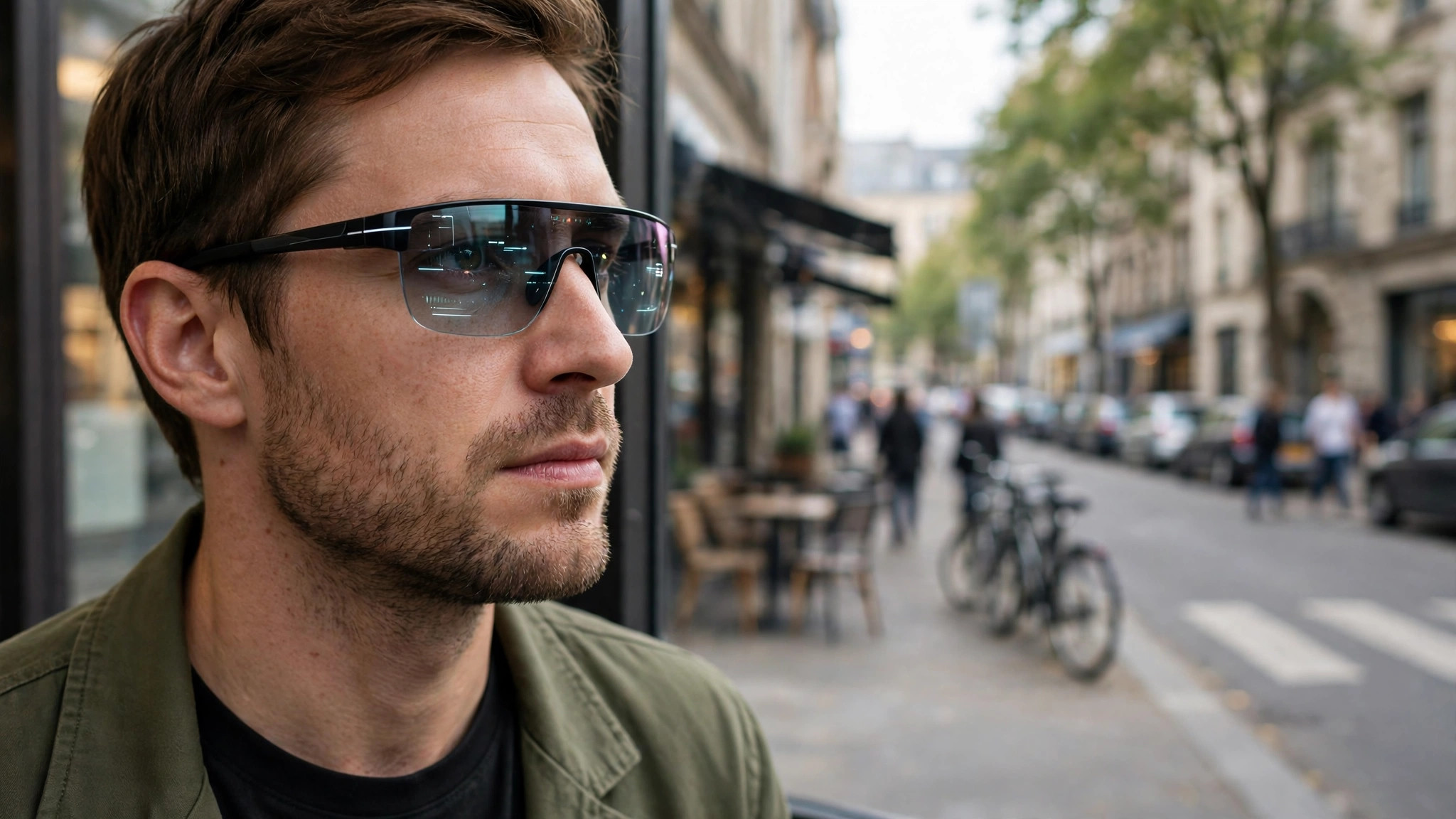
AI startup PrismML — founded by Caltech researchers and advised by UC Berkeley's Ion Stoica — has built a version of its tiny language models for smart glasses running on Qualcomm's Snapdragon chips. The model, a 2-billion-parameter vision-language version of its "Bonsai" LLM, was showcased at Qualcomm's Snapdragon Summit on the Snapdragon AR1 Gen 1 Platform.
PrismML's pitch is aggressive compression without the usual quality collapse: it shrinks larger models down to roughly a quarter of their size while retaining almost all of their standard-benchmark performance, using 1-bit techniques. The smart-glasses build is tuned for vision and language together, so a wearer can ask about whatever they're looking at in real time — running locally on the device rather than round-tripping to a cloud server.
The bigger story is the direction of travel: open-weight AI that runs on the devices people already carry, as an alternative to depending on proprietary labs' privacy promises and their ever-growing appetite for datacenter compute. PrismML hasn't announced any shipping smart glasses with the model yet — but the demo running on a commercial Snapdragon platform is the clearest signal yet that glasses-grade AI is becoming a software problem, not just a hardware one.
The technical claim underneath the demo deserves attention. Shrinking a model to a quarter of its size while keeping "almost all" benchmark performance — using 1-bit techniques — is exactly the kind of unglamorous compression work that determines whether AI escapes the datacenter. Benchmarks are one thing; holding up on real, messy, real-time vision-and-language queries while sipping battery on a glasses chip is another. If PrismML's numbers survive independent testing, it puts serious pressure on the assumption that capable AI must live in the cloud.
That assumption is already cracking. The industry spent two years centralizing intelligence into giant datacenters, and is now discovering the costs: latency, privacy exposure, and an uncomfortable dependence on a handful of providers. On-device AI flips the trade — your data never leaves your glasses, queries work without a connection, and no company's privacy promise stands between you and your own information. For a device you wear on your face all day, that is not a minor feature; it is the whole ballgame. Nobody wants their smart glasses streaming everything they see to a server farm.
The open-weights angle matters too. PrismML is positioning tiny, efficient models as an alternative to renting intelligence from proprietary labs — a future where capable AI is software you run, not a service you subscribe to. That vision is still early: no shipping glasses run this model yet, and the gap between a summit demo and a product people wear daily is wide. But the direction is unmistakable. Glasses-grade AI stopped being a hardware fantasy the moment it became a compression problem, and compression problems get solved.
For consumers, the takeaway is patience with a payoff: the smart glasses worth wearing are still a generation or two away, but the software bottleneck is dissolving faster than the hardware one. When efficient models like these meet lighter, longer-lasting glasses hardware, the category could finally cross from novelty to necessity. The winners will be whoever nails the unsexy details — battery life, weight, and the trust that what your glasses see stays yours.