 Aitopkit
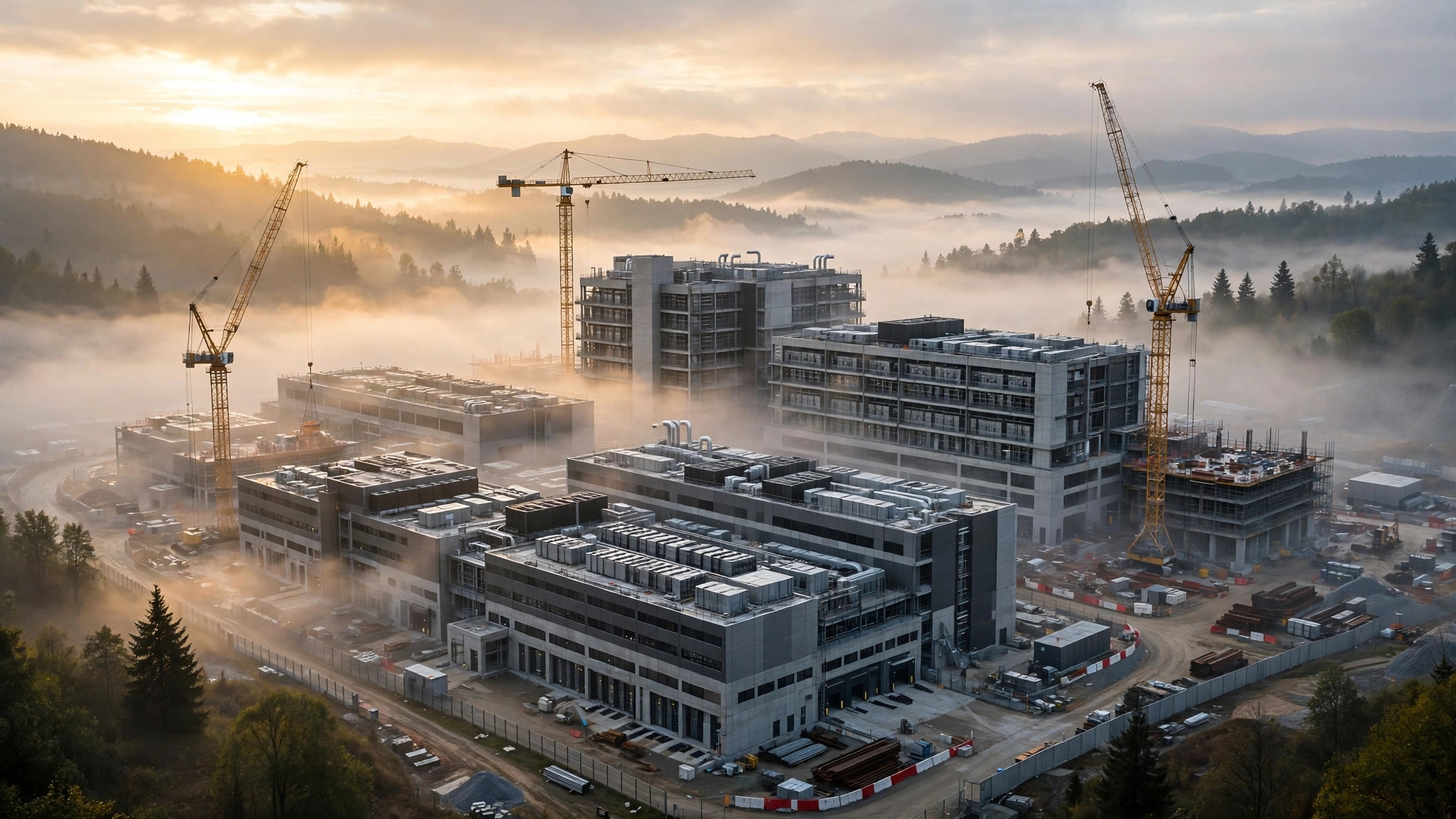
British AI neocloud Nscale has secured $3.36 billion in pre-IPO convertible financing, the company announced ahead of a planned US initial public offering. The round was led by Third Point, with participation from Apollo, Citadel, Hudson Bay, and the Abu Dhabi Investment Council — and a $1 billion commitment from Nvidia expected to fund in mid-November. An initial $2.36 billion tranche funds at close.
Nscale sits in the "neocloud" lane: cloud infrastructure purpose-built for AI workloads, competing with the hyperscalers on GPU availability rather than general-purpose compute. The financing follows the same logic as the price war raging between OpenAI and Anthropic — demand for inference and training capacity keeps outrunning supply, and the money is flowing to whoever can deploy GPUs fastest. Nvidia's direct participation is the tell: the chipmaker is effectively underwriting its own customers' buildouts.
For tool users the infrastructure story is the one that actually touches their wallets. Every price cut on API tokens and every new free-tier GPU hour traces back to rounds like this one. If the neocloud buildout keeps pace, the era of cheaper, more capable AI tooling accelerates with it — which is exactly why we track free AI tools as closely as the funding headlines.
Nvidia's $1 billion commitment deserves a second look, because it reveals the circular economy at the heart of the AI boom. Nvidia sells the chips, then invests in the companies buying the chips, whose buildouts create demand for more chips. Everyone in the loop benefits as long as end demand for AI compute keeps growing — which, so far, it has. But circularity cuts both ways: if AI demand ever stalls, the same loop amplifies the downturn, with chipmaker, neocloud, and lender all exposed to the same bet.
The neocloud model itself is the experiment. Hyperscalers sell AI compute as one line item among hundreds; neoclouds like Nscale bet everything on GPU availability, power efficiency, and speed of deployment. The thesis is that AI workloads are different enough — bursty, power-hungry, latency-sensitive — to support a dedicated infrastructure layer. The $3.36 billion says sophisticated investors buy that thesis. A successful US IPO would then test whether public markets agree, and give the neocloud category its defining bellwether.
For developers and tool users, the practical upshot is the same as every infrastructure round: capacity built today becomes cheaper tokens tomorrow. The neocloud race is, from the user's perspective, a race to make AI cheaper. As long as that race continues, the golden age of affordable AI tooling continues with it.
The deeper question is durability. Infrastructure booms have a history of overbuilding — fiber in the 90s, datacenters in the 2000s — and the winners are usually the ones who survive the eventual digestion period. Nscale's bet is that AI demand is different: not a cycle but a permanent new layer of compute. If that thesis holds, today's seemingly enormous rounds will look quaint in retrospect. If not, the neoclouds will learn what every infrastructure generation learns — concrete is forever, demand is not.